
We were a family of 6. Our parents, my there brothers and me.
My father died suddenly when I was seven years old.
Ten years later, my younger brother died suddenly too.
Then in 2019, my older brother died in an accident, also suddenly and far too young.
More recently, my mum died as well, peacefully.
Grief has shaped much of my life. But strangely, when my older brother died, I remember feeling genuinely shocked that something so catastrophic could happen to our family again.
Some irrational part of me had quietly believed we were somehow immune now.
As though life had already taken enough.
As though losing my father and my younger brother had exempted me from ever having to stand in that kind of pain again.
But when my older brother died, something inside me cracked open in a completely different way.
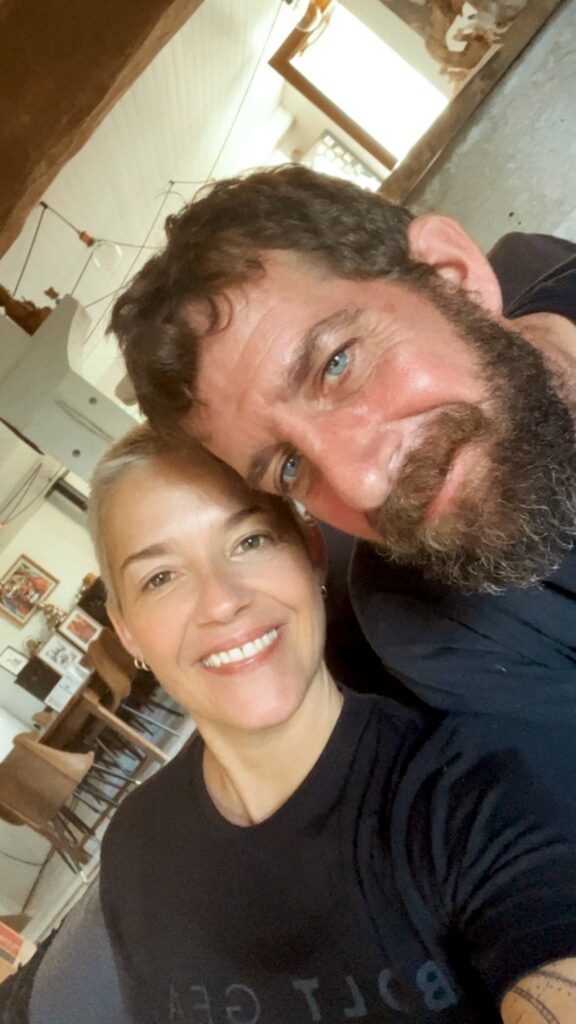
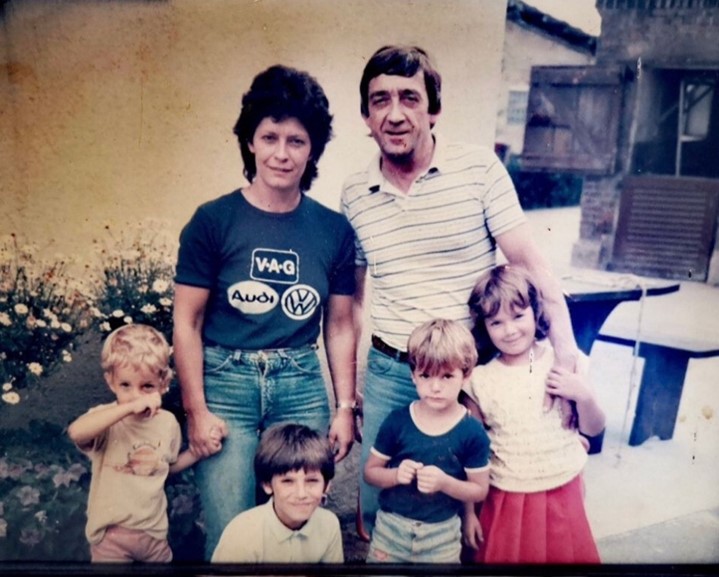
We were a family of 6. Our parents, my there brothers and me.
My father died suddenly when I was seven years old.
Ten years later, my younger brother died suddenly too.
Then in 2019, my older brother died in an accident, also suddenly and far too young.
More recently, my mum died as well, peacefully.
Grief has shaped much of my life. But strangely, when my older brother died, I remember feeling genuinely shocked that something so catastrophic could happen to our family again.
Some irrational part of me had quietly believed we were somehow immune now.
As though life had already taken enough.
As though losing my father and my younger brother had exempted me from ever having to stand in that kind of pain again.
But when my older brother died, something inside me cracked open in a completely different way.
I was devastated by losing him. But alongside the grief itself, there was another painful realisation slowly emerging underneath:
I had not fully understood how much unattended grief had already shaped my life.
Or more accurately perhaps, how much life it had quietly taken away from me while I was still functioning.
That was the part that made me angry.
Not angry at grief itself.
Not angry at life.
Angry and deeply sad to realise how much time I had spent surviving instead of fully living.
Time I could have spent more present.
More open.
More emotionally available.
More connected to the people who were still here.
Especially my older brother.
Because when he died, I suddenly saw something with painful clarity:
grief had not only taken the people I loved.
It had also narrowed parts of my own life afterwards.
And without his accident in 2019, I genuinely do not think I would have fully realised how affected I still was by earlier losses.
That accident became a wake up call.
A brutal one.
I realised I could not continue carrying grief unconsciously and expect it not to shape everything underneath the surface.
I knew grief would always be part of my life. Profound loss never completely leaves us.
But I also reached a point where I thought: enough.
Enough surviving.
Enough disconnecting from myself.
Enough moving through life half present while convincing myself I was coping because I was functioning.
Because functioning and healing are not the same thing.
Shortly after my brother died, lockdown happened.
As my own inner world was crumbling from multiple losses, the entire world suddenly seemed to be falling apart too.
At that time I was living alone in England. Isolated from my younger brother and my mum who was still alive tehn.
And that’s where I started diving deeply into neuroscience, grief research, psychology, attachment theory, trauma, mindfulness, stress physiology and human behaviour.
When everything seemed to be falling apart, data, figures, numbers became strangely stabilising to me.
Research papers.
Brain scans.
Statistics.
Graphs.
Studies.
Not because I wanted to intellectualise grief away. But because understanding gave me something to hold onto.
Science helped me in two profound ways.
First, it helped me make sense of my own experience, by understanding what grief actually does to the brain and nervous system.
How attachment works.
How chronic stress affects the body.
How loss impacts concentration, sleep, identity, relationships and emotional regulation.
And slowly, I realised there was nothing wrong with me. My nervous system was doing exactly what it had been designed to do after repeated loss and prolonged stress.
Top of Form
Bottom of Form
The second thing science gave me was just as important.
It made me realise how universal grief really is.
Grief feels incredibly personal when you are inside it. The details are unique. The relationship is unique. The pain feels isolating and impossible to explain fully.
And yet grief is also one of the most shared human experiences there is.
Every human being will lose people they love.
Every nervous system will eventually encounter grief.
Every life will eventually be shaped by loss.
Oddly, understanding this made me feel less alone.
Not in a superficial “you are not alone” kind of way.
But in a deeply human way.
It connected me more tenderly to other people.
To our fragility.
To our shared humanity.
To the reality that beneath all the noise and ambition and identity, we are all just human beings trying to love and survive inevitable loss.
That period became the beginning of my own recovery.
Not recovery in the sense of “getting over” grief.
I do not believe in that.
More in the sense of reclaiming agency and capacity.
Learning how to understand my emotions instead of fearing them.
Learning how to stop using self blame and judgement as default responses to my inner world.
Learning how to see emotions and behaviours as information rather than evidence that something was wrong with me.
And slowly, learning how to become more present inside my own life again.
This is also why movement became such an important part of my work.
Because grief is not only cognitive.
It lives in the body.
The breath changes.
The nervous system tightens.
People brace against life without even noticing they are doing it.
Movement helped me reconnect to myself again.
To safety.
To grounding.
To being fully here.
Over time, all these different pieces slowly came together:
grief
neuroscience
mindfulness
movement
nervous system regulation
self compassion
human behaviour
And eventually, they became my work.
The reason I write these weekly emails is not just to teach grief theory or neuroscience.
It is to help people make sense of their experience.
To help people understand how they are really coping beneath the surface.
To help highly functioning grieving people recognise themselves earlier than I did.
Because grief had already taken enough from my life.
And I realised we have to become intentional about not allowing it to quietly take the life that is still happening around us too.
Today, I support grieving people through 1:1 sessions, courses, guided meditations, movement practices and writing.
A lot of this work is about helping people slowly rebuild:
capacity
presence
agency
connection
self understanding
But because life still deserves to be lived alongside it.
And if any part of this resonated with you, my 1:1 sessions are designed for people navigating grief while still trying to carry the responsibilities of daily life.
And if you know someone quietly struggling underneath the surface, feel free to share these weekly articles with them too. Sometimes understanding what is happening inside us changes everything.
And finally, I want to thank you with all my heart for being here.
Nearly 5,000 people receive my weekly newsletters, and many of you read my blog posts. That number continues to grow every week. Quietly, steadily, a community of people all trying to understand grief a little better, carry life a little more consciously, and feel a little less alone inside experiences that can often feel impossible to explain.
I never expected these reflections to reach so many people when I first started writing them.
So truly, thank you for reading.